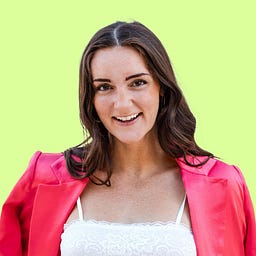
In 2022, Alix Earle's manager called and told her she had to post a sponsored TikTok.
She almost said no. She was dealing with a severe cystic acne breakout, the kind most influencers would hide behind a filter or just go dark until it passed. But she posted anyway, bare-faced and mid-breakout, and talked about the reality of dealing with acne while simultaneously having thousands of people watching your every move.
That one decision to show up at her worst instead of waiting to show up at her best — launched a million followers.
Fast forward to today: Alix Earle is 25. Her net worth is an estimated $20 million. She commands $250,000 to $450,000 for a single sponsored post. She’s been in four Super Bowl commercials, Harvard Business School has brought her in twice to teach students about how brands reach consumers, and two weeks ago, she launched her first brand, Reale Actives, a skincare line backed by the same venture firm behind Kim Kardashian’s Skims.
Now the launch itself isn’t what I want to talk about today, because what I find even more interesting is the business model behind it all. Alix Earle didn’t stumble into $20 million by posting Get Ready With Me videos. She made a series of very specific decisions that turned a personal brand into a portfolio.
And these kinds of business structure decisions aren’t just for people with 14 million followers.
The Thing Most People Missed
If you’re watching Alix Earle from the outside, it looks like the standard influencer trajectory: goes viral, gets brand deals, launches a product. But that’s just the tip of the iceberg.
What Alix actually built over four years — is a three-layer monetization model that most founders with personal brands haven’t even considered. And the order she built it in matters just as much as the layers themselves.
1. She stopped trading her influence for a check — and started trading it for equity.
This is the decision that separates Alix Earle from 99% of influencers.
When Poppi came to her with a brand deal, she didn’t just take the endorsement fee. She negotiated an equity stake as part of the package, and she became a part owner.
When PepsiCo acquired Poppi for $1.95 billion, Alix got paid on the exit.
Most creators — and honestly, most founders with personal brands — treat their influence like a time-for-money trade. Someone offers you $5K for a post? You take it. Someone offers $20K for a campaign? Even better. But the ceiling on that model is always going to be your time and your audience’s attention span.
Alix flipped the model. Instead of renting her audience to brands, she started investing her audience into brands, and that shift changed everything about her earning potential.
Here’s what this means for founders: If you have an audience — even a small one — your attention is an asset worth owning, not just exchanging for a fee. The next time someone asks you to promote something, collaborate on something, or partner on something, the better question to ask is "what do I own when this is over?"
2. She built a portfolio.
Alix didn’t just launch one thing. She built strategic positions across multiple categories.
Poppi (prebiotic soda) — equity stake, benefited from the $1.95B PepsiCo acquisition.
SipMargs (canned cocktails) — investor and brand partner.
Gorgie (clean energy drinks) — strategic investor.
Reale Actives (skincare) — her own brand, backed by Imaginary Ventures.
Notice what she did NOT do: she didn’t launch her own soda. She didn’t create her own energy drink. She didn’t compete with the brands she was investing in. She took equity positions in categories that aligned with her audience, and then built her own brand in the one category she had a personal, undeniable story to tell.
This is portfolio thinking, and here’s why it matters:
Most personal brand founders go straight from "I have an audience" to "let me create a course" (or a membership, coaching program, template etc) and end up with one digital product, one revenue stream, and one bet.
But what if instead you asked: where can I invest my attention for ownership, and in what category do I have genuinely powerful positioning because of my personal story?
You don’t need to build everything, but you do need to own something.
3. Her biggest vulnerability became her strongest positioning.
Here’s where Alix’s story gets personal, and where the real lesson about personal brands lives.
When she launched Reale Actives, a skincare line for acne-prone skin, nobody was surprised. And that’s the point.
She spent four years building credibility on this exact topic, by posting bare-faced videos of her skin at its worst and talking about it like a real person who was genuinely going through it.
As one investor put it: "Most creator brands launch, and then try to build credibility. Alix spent four years building credibility first, then leveraged it to launch a brand solving the exact problem her audience watched her struggle with."
She could have slapped her name on a skincare line two years ago, when every influencer and their manager were launching beauty brands. Instead, she spent two years developing the product with a legitimate CEO (an alum of Kiehl’s and The Body Shop) and the investors behind some of the biggest celebrity brands in the world.
The takeaway here is that your positioning is the thing people already associate with you: the problem they’ve watched you navigate, the opinion you keep coming back to, the result you keep delivering. If you had to launch a brand tomorrow and your audience wasn’t surprised by the product, that’s how you’d know you nailed it. If they’d feel confused, your positioning still needs work.
4. The launch was a masterclass in controlled anticipation.
I won’t go deep on the Reale Actives launch because I’ll save that for a separate post, but one detail worth calling out is that months before the launch, Alix created a new Instagram account called "wtfisalixdoing."
She started planting unlabeled products in the background of her content. She posted from her dermatologist’s office and she let her audience build the narrative, speculating, discussing, creating content about what she might be doing.
By the time she walked onto The Tonight Show to announce the brand, the account already had over 500,000 followers — on an account that hadn’t sold a single product yet.
She sold the mystery (which is something Taylor Swift also does really well with her marketing easter eggs) and it worked powerfully because by the time people could actually buy, they’d already bought into the story. The product sale just became the bi-product of the story she’d already sold.
Now the reality is, you’re probably not going to end up on air with Jimmy Fallon. But you do need people to feel like they’re watching something unfold, like they’re in on it before it goes public. The best launches don’t start with the reveal. They start with a story that is often guided by the audience themselves. Their experiences, desires, problems, or expectations told through your personal experience.
Before your next launch, ask yourself: What can I start showing people 60 days before I have anything to sell? What mystery can I let my audience build a narrative around? The goal isn’t a big reveal — it’s making people feel like they were part of the story before the product existed.
The Bigger Picture
Alix Earle is building what I’d call a personal brand holding company — a portfolio of owned and invested positions, all powered by one distribution channel: her.
And the playbook she’s using (equity over fees, portfolio over products, vulnerability as positioning, patience over speed) works whether you have 14 million followers or 14 thousand. It’s a business architecture that scales in both directions.
The founder reading this with 5,000 followers and a consulting business can use the exact same logic. You don’t need millions of followers to trade influence for equity, a Super Bowl commercial to build anticipation around a launch, or Imaginary Ventures to spend real time on a product before you rush it to market.
You need to be clear enough about what you stand for that when you make your next move, nobody’s surprised — they’re just ready.
To owning the thing instead of just promoting it,
Ashley
P.S. I’m curious: were there any brand strategies here that surprised you or didn’t know about? I’d love to know which one you found most intriguing! Hit reply and let me know!
Know a founder who’s still trading influence for fees instead of equity? Send them this article!
If you are interested in working together and hiring me as your Fractional CMO, click here.